
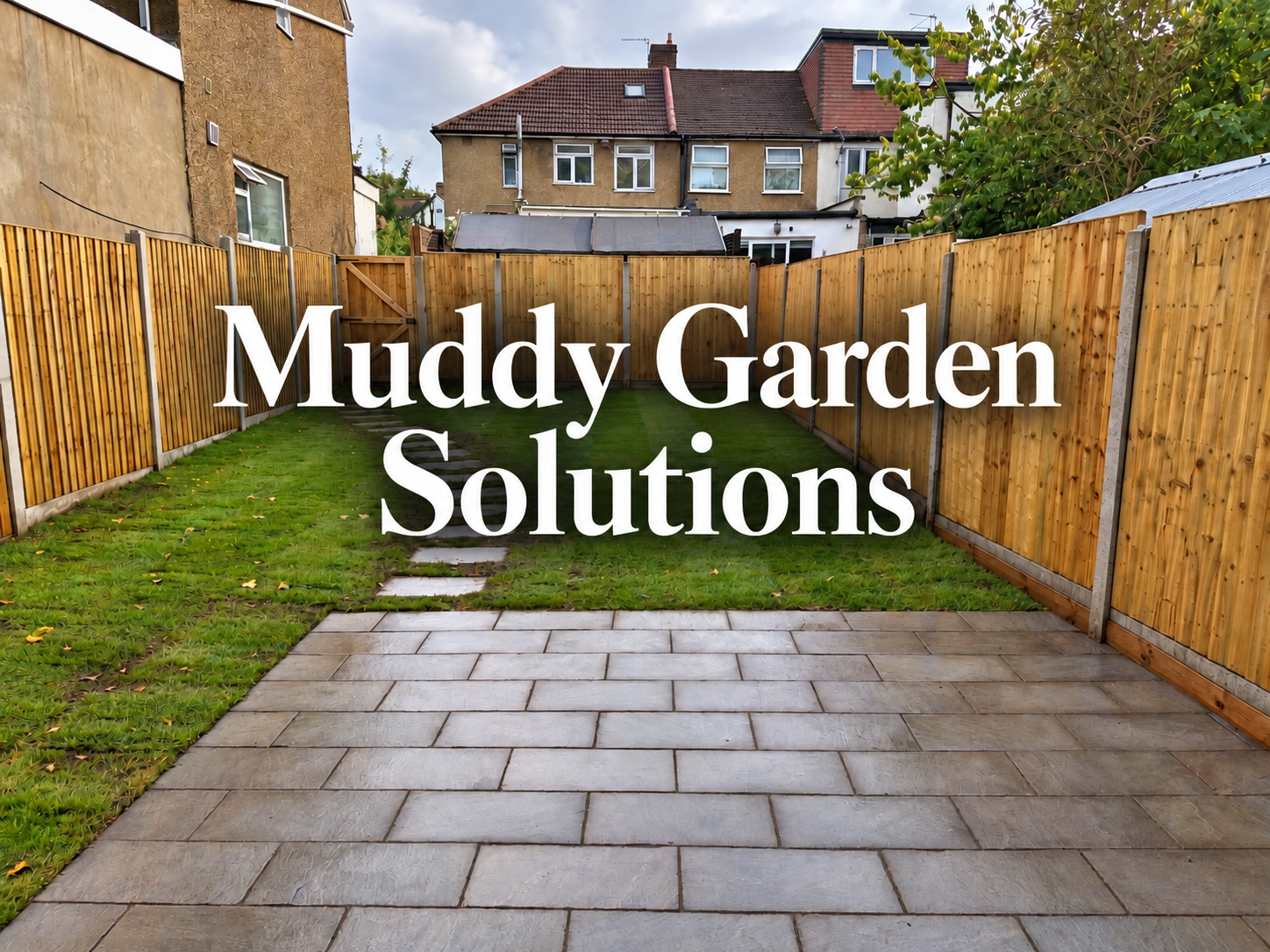
You can stop your garden becoming a mud bath by improving drainage, reducing foot traffic across wet lawn, and using more durable surfaces such as stepping stones, patios or artificial grass in problem areas. If the lawn itself is damaged, muddy garden solutions like better ground preparation and fresh turf can also help create a surface that copes more effectively with wetter weather.
October is often when the first warning signs appear.
A lawn that stayed firm through summer may suddenly feel soft underfoot. The route to the shed starts developing worn patches. Mud appears around the back door, underneath the washing line or wherever children and pets regularly cross the garden.
A few wet days do not necessarily mean your garden has a serious drainage problem. But if the same areas repeatedly become soggy or water sits on the surface long after rainfall, it is worth looking at the cause rather than accepting several months of muddy shoes and an unusable lawn.
For some gardens, the solution is relatively simple. For others, improving drainage or changing how different areas of the garden are surfaced can make a much bigger difference.
Why does your garden become so muddy when the weather gets wetter?
Gardens become muddy when soil receives more water than it can absorb or drain away, especially when the ground is compacted, heavy or repeatedly walked over. Once wet turf starts wearing away, the exposed soil beneath quickly turns into mud.
London gardens can be particularly varied in this respect. One garden may drain relatively quickly after heavy rain, while another a few streets away stays wet for days.
Heavy or compacted soil, poor ground preparation and regular foot traffic can all contribute to waterlogging. Repeated saturation can also weaken the lawn and make moss, algae and bare patches more likely to develop.
You may notice the problem first in:
- routes between the house and shed
- areas around gates
- shaded sections of lawn
- spaces underneath trees
- places where children or pets regularly play
- low points where rainwater naturally collects
The important question is not simply why the grass is muddy, but where the water is going.
That answer helps determine which muddy garden solution is likely to work.
How can you tell if poor drainage is causing the problem?
Poor drainage is likely to be the problem if water remains on the surface long after rainfall, the lawn regularly feels soft or squelchy, or the same areas become saturated again and again. Persistent puddles and slow-drying patches are stronger warning signs than temporary softness after a heavy shower.
Look at the garden shortly after rainfall and again several hours later.
If some sections remain wet while others have already dried, there may be a local drainage issue, compacted ground or a low point in the garden where water collects.
Other signs include:
- persistent puddles
- moss or algae developing in damp areas
- thinning or yellowing grass
- soil that feels hard or compacted
- sections of lawn that remain wet much longer than the rest
- muddy patches that return every autumn
In some gardens, improving the soil and relieving compaction is enough. More persistent waterlogging may require changes to levels, drainage or the way the garden is surfaced.
Before covering the problem, it makes sense to understand what is causing it.
Can aerating the lawn help a muddy garden?
Yes, aerating can help a muddy lawn when soil compaction is preventing water from draining effectively. Creating small holes in compacted ground improves the movement of air and water through the soil and can help grass roots grow more successfully.
This is particularly useful in areas that receive regular foot traffic.
However, aeration is not a solution for every wet garden.
If the soil is extremely heavy or the garden has a wider drainage problem, aerating the lawn alone may not be enough. It also matters when the work is carried out, because working on completely saturated soil can cause further compaction and damage.
For a lawn that is only beginning to struggle after heavy summer use, autumn aeration and suitable top dressing may help restore the ground.
For a garden that repeatedly holds standing water, a more substantial landscaping or drainage solution may be needed.
Can new turf fix a muddy lawn?
New turf can fix a muddy or worn lawn when poor grass coverage is the main problem, but the soil and drainage underneath must be prepared properly first. If waterlogging caused the old lawn to fail, laying fresh turf without addressing the cause is unlikely to provide a lasting solution.
This distinction is important.
If the lawn has become patchy mainly because of heavy use, summer wear or poor maintenance, preparing the soil and laying fresh turf can restore the space relatively quickly.
If the lawn stays waterlogged for long periods, the preparation beneath the turf matters just as much as the turf itself.
That may involve:
- loosening compacted soil
- correcting uneven areas
- improving drainage
- preparing an appropriate topsoil layer
- reducing repeated traffic across vulnerable sections
The aim is not simply to create greener grass.
It is to establish a lawn that is better suited to the conditions and the way the garden is actually used.
Can stepping stones stop muddy patches forming?
Yes, stepping stones can stop muddy patches forming when the problem is caused mainly by repeated foot traffic across the same section of lawn. They create a firm route through the garden and protect wet grass from being worn down into bare soil.
This is one of the simplest solutions to a very common autumn problem.
Think about the paths people naturally take through your garden.
Perhaps everyone walks from the patio to the shed. Maybe the shortest route from the back door to the gate cuts straight across the lawn.
Trying to force people around the edge rarely works for long. It is often more practical to adapt the garden to the route people already use.
Well-positioned stepping stones can provide that route while preserving most of the lawn.
They can also become part of the garden design rather than looking purely functional, especially when their material ties in with an existing patio, border or other hard landscaping.
Would a patio solve a muddy garden problem?
A patio can solve a muddy garden problem when a heavily used area needs a durable surface rather than grass. It is especially useful beside the house, around seating areas or in parts of the garden where constant foot traffic repeatedly damages the lawn.
The key is choosing where hard landscaping genuinely improves how the garden works.
Replacing an entire lawn because one narrow route becomes muddy is usually unnecessary.
A properly prepared patio or pathway may be a better solution if it is installed exactly where people need a stable walking or seating surface.
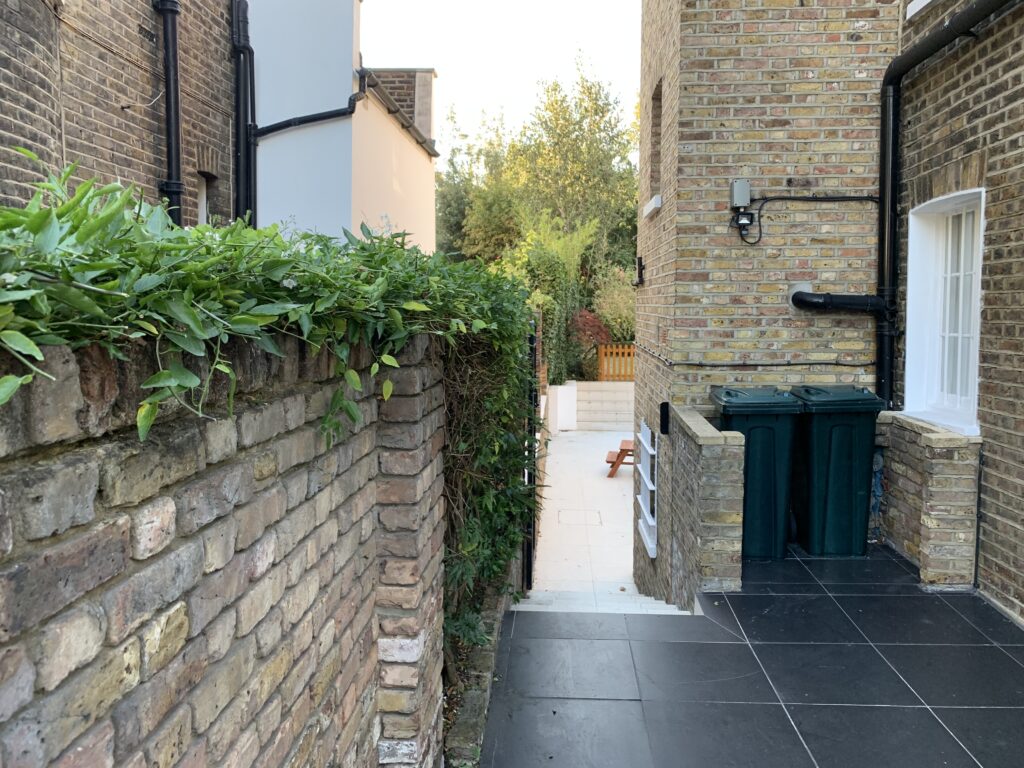
A patio can provide:
- a clean outdoor seating area
- easier access during wet weather
- a practical route from the house
- space for furniture and containers
- less wear on surrounding lawn areas
Drainage still needs to be considered carefully.
A new hard surface should not simply push rainwater towards another part of the garden and create a new wet patch.
Good garden landscaping considers patios, lawn, pathways and drainage together.
Is artificial grass a good solution for a muddy garden?
Artificial grass can be a practical solution for muddy areas where heavy use repeatedly damages natural lawn, but only when the ground underneath is prepared and drained correctly. It prevents the surface from becoming bare and muddy, but it does not automatically solve an existing waterlogging problem.
One of its main advantages is that regular foot traffic does not wear the surface down in the same way as natural grass.
That can make artificial grass suitable for:
- small family gardens
- play areas
- gardens used regularly by pets
- heavily shaded areas
- sections where natural grass repeatedly fails
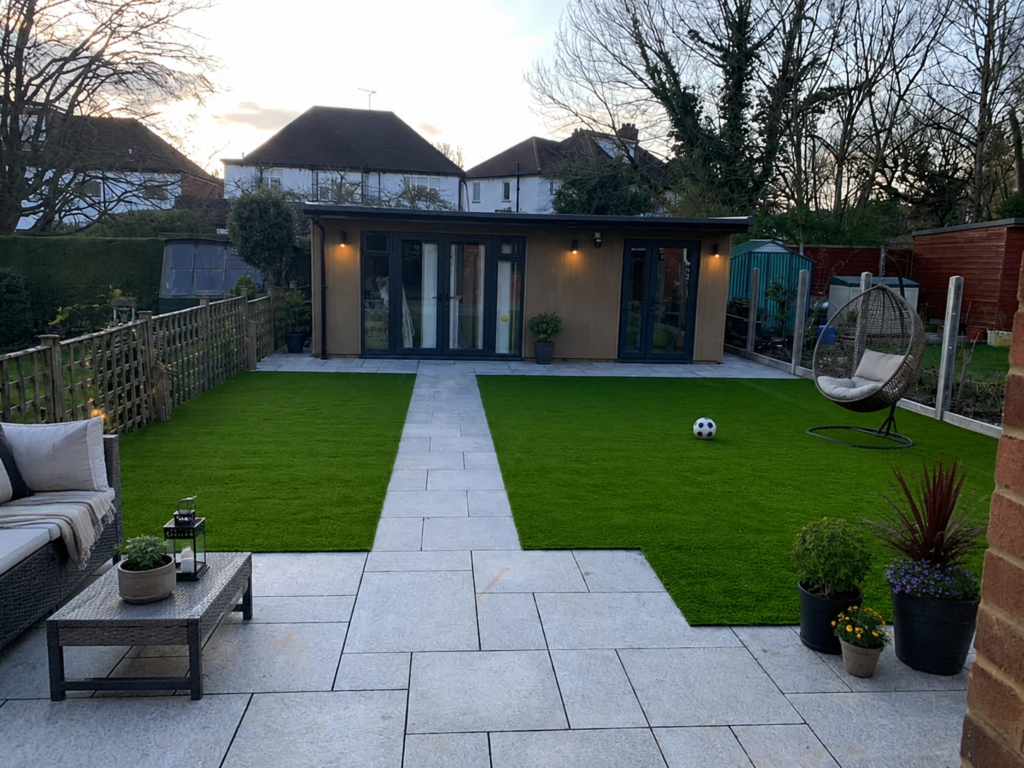
However, the quality of the installation matters.
The existing ground needs to be excavated and prepared correctly so rainwater can drain away rather than collecting beneath the artificial surface.
Artificial grass therefore works best as part of a wider landscaping solution, rather than as a quick covering for a wet lawn.
Should you replace a muddy lawn completely?
No, you do not necessarily need to replace the whole lawn if only certain sections become muddy. In many gardens, the better solution is to keep grass where it grows well and use different surfaces only in areas affected by poor drainage, shade or heavy foot traffic.
This can result in a more practical and visually interesting outdoor space.
For example, one London garden could combine:
- natural turf across the main open area
- stepping stones along a regular walking route
- a patio beside the house
- artificial grass in a heavily used play area
- planting in sections where shade makes grass difficult to maintain
Each area then serves a specific purpose.
This can be particularly useful in smaller London gardens, where every part of the outdoor space needs to work hard.
Instead of asking one lawn to handle seating, play, access and heavy traffic, a mixed layout gives each activity a more suitable surface.
What should you avoid doing to a waterlogged lawn?
Avoid repeatedly walking over a waterlogged lawn, mowing saturated grass or carrying out heavy work while the soil is extremely wet. Pressure on wet ground can increase compaction, damage grass roots and make drainage problems worse.
This can quickly become a cycle.
The lawn becomes muddy, people continue walking across it, the ground compacts further and water drains even more slowly.
The same route then becomes increasingly worn and bare.
Give saturated ground time to drain where possible and avoid unnecessary traffic until conditions improve.
If one particular area fails every autumn despite regular maintenance, that may be a sign that grass is not the most practical surface for that part of the garden.
When should you consider professional garden drainage or landscaping?
Professional landscaping is worth considering when waterlogging affects a large area, muddy patches return every year or several parts of the garden need to be redesigned together. A persistent drainage problem usually needs more than simply replacing damaged grass.
A single muddy track leading to the shed may be solved with stepping stones.
A garden that holds standing water for long periods, slopes towards the house or regularly becomes unusable after rain needs a more careful assessment.
Depending on the cause, possible solutions may include:
- improving compacted soil
- adjusting garden levels
- improving drainage
- replacing damaged turf
- adding paths or stepping stones
- creating patio areas
- installing artificial grass where natural lawn struggles
There is no single muddy garden solution that works everywhere.
The most effective approach comes from understanding where the water collects, why it stays there and how the household actually uses the garden.
That is what turns a temporary fix into a garden transformation that keeps working through future wet seasons.
Frequently asked questions
Why is my lawn suddenly muddy in autumn?
Lawns often become muddy in autumn because rainfall increases while cooler temperatures and lower evaporation mean the ground takes longer to dry. Compacted or heavy soil can make the problem more noticeable because water drains through it more slowly.
How can I fix a muddy garden without replacing the lawn?
You can often improve a muddy garden without replacing the entire lawn by aerating compacted soil, improving drainage and reducing foot traffic across wet areas. Adding stepping stones or a small path can also protect the most frequently used routes.
Are stepping stones good for a muddy lawn?
Yes, stepping stones are a practical way to prevent repeated foot traffic from damaging wet grass. They are particularly useful between the house, gate, shed or other parts of the garden that people access regularly.
Is artificial grass better than turf for a wet garden?
Artificial grass can cope better with heavy foot traffic, but neither artificial grass nor turf will fix poor drainage on its own. The best option depends on the soil, drainage, level of use and how you want the garden to look and function.
Can I lay new turf over a waterlogged lawn?
You should address the cause of waterlogging before laying new turf. If drainage or compacted soil caused the existing lawn to deteriorate, simply adding new turf risks the same problem returning.
Tired of dealing with muddy shoes every time it rains?
You do not have to accept a muddy, unusable garden every time the weather turns wet. Improving drainage, protecting heavily used routes and choosing suitable surfaces for different parts of the garden can make the outdoor space cleaner, more practical and easier to enjoy throughout autumn and winter.
Sometimes a relatively small change, such as improving the lawn or adding stepping stones, is enough.
In other gardens, adjusting drainage, installing a patio or changing how different areas are surfaced can create a much more practical long-term solution.
PI Gardening provides garden landscaping, turfing, artificial grass installation, patios and stepping-stone solutions across London and surrounding areas.
If your garden regularly becomes muddy or waterlogged when the weather turns wet, get in touch for a free quote and find out which solution would work best for your space.