
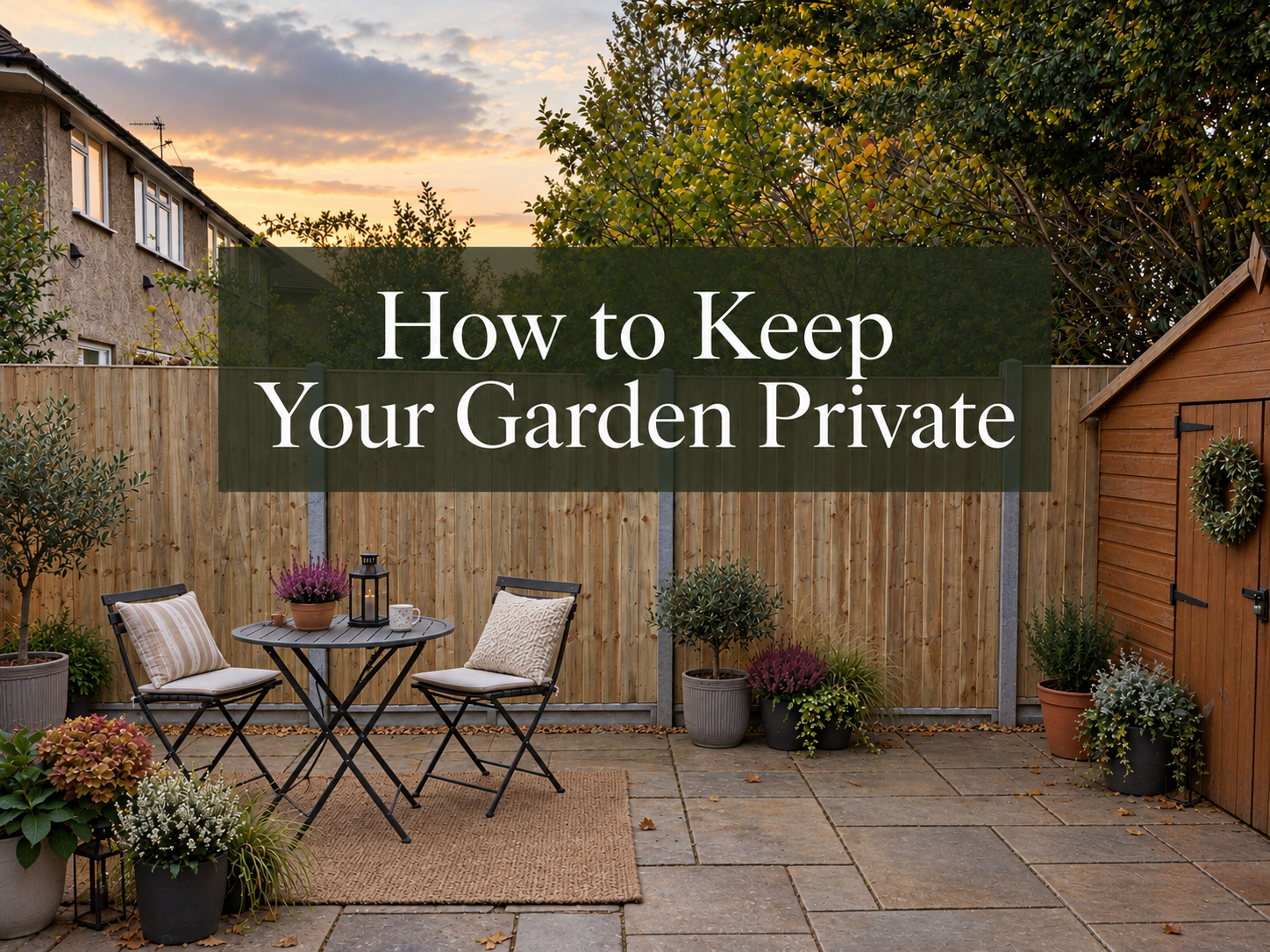
You can improve garden privacy in autumn by repairing exposed boundaries, installing suitable fencing and adding evergreen screening where summer foliage once provided cover. For London homeowners, combining a well-designed fence with carefully positioned planting can help keep seating areas and outdoor spaces private throughout autumn and winter.
During summer, a garden can feel wonderfully secluded. Trees and climbing plants soften the boundaries, leafy shrubs screen neighbouring windows, and a small seating area can feel surprisingly sheltered, even in a busy London neighbourhood.
Then autumn arrives. This seasonal change can reveal privacy problems that have been there all along. A few thoughtful changes can help you maintain the privacy you enjoyed during summer while making your garden more comfortable throughout the colder months.
Why does your garden feel less private in autumn?
Garden privacy in autumn often decreases because deciduous trees, shrubs and climbing plants lose their leaves. The foliage that concealed neighbouring windows, gardens and buildings during summer gradually disappears, exposing views that previously went unnoticed.
This can be particularly noticeable in London’s terraced and semi-detached properties, where neighbouring gardens often sit close together.
A tree at the end of the garden might screen an upstairs bedroom window throughout summer. Once its leaves fall, that same window may have a clear view of your patio or seating area.
The problem can also appear along garden boundaries. Overgrown shrubs may have concealed gaps in old fencing, while climbing plants can hide damaged or missing panels.
As the foliage thins, these issues become much easier to spot.
Before making changes, spend some time observing your garden. Look at it from your usual seating area, the kitchen doors and any other places where privacy matters.
You may discover that only one or two sections need attention rather than the entire boundary.
Can new fencing improve garden privacy in autumn?
Yes. New fencing provides a more consistent privacy barrier than seasonal foliage. Solid or closely fitted garden fence panels can screen neighbouring gardens throughout the year, regardless of whether surrounding trees and shrubs retain their leaves.
For London homeowners, fencing also creates a clear boundary and provides a backdrop for planting, seating and other landscaping features.
However, the right solution depends on what already exists.
If your current fence is structurally sound but has a few damaged panels, targeted repairs may restore the privacy you need. If the posts have weakened or the entire boundary offers insufficient screening, replacement may make more sense.
PI Gardening provides
fence installation and repair
across London and surrounding areas, including repairs to posts, panels and gates.
When choosing new fencing, consider:
- The amount of privacy you need throughout the year
- The direction of neighbouring windows and sightlines
- The height and condition of existing boundaries
- The amount of light you want to retain
- The appearance of your garden and surrounding properties
A solid fence can create a more secluded space, but the design should still suit the garden. Taller or more substantial panels are not automatically the right solution for every property.
Which fence styles provide privacy without making your garden feel enclosed?
Closeboard, overlap and carefully designed slatted fencing can all improve privacy in a London garden. The right choice depends on how much screening you need, the garden’s dimensions and the amount of light you want to preserve.
A narrow garden surrounded by tall buildings may need a different approach from a larger property with open boundaries.
Closeboard fencing for consistent screening
Closeboard fencing uses closely fitted vertical boards to create a substantial boundary. It can suit gardens where homeowners want dependable privacy without relying on surrounding planting.
The clean, continuous surface also makes an attractive backdrop for evergreen shrubs, raised beds and garden furniture.
Overlap fencing for a traditional garden
Overlap fence panels provide a familiar timber appearance and can create effective screening along garden boundaries.
They suit many traditional London gardens, particularly where homeowners want to replace tired fencing without dramatically changing the garden’s character.
Slatted fencing for a lighter appearance
Slatted fencing can create a more contemporary look while allowing some light and air through the boundary.
However, the spacing between the slats matters. Wider gaps may create an attractive design but offer less privacy, especially when someone looks through the fence from an angle.
Can trellis and evergreen planting provide privacy throughout autumn?
Yes. Trellis and evergreen planting can improve privacy throughout autumn, especially when you use them together with existing fencing. Trellis provides structure, while suitable evergreen climbers and shrubs maintain screening after deciduous plants lose their leaves.
The Royal Horticultural Society recommends choosing hedging plants according to their size, growing conditions and maintenance needs. Evergreen hedges offer year-round screening, while deciduous varieties generally provide less privacy during winter.
This is particularly useful if your garden already has a healthy fence but feels exposed above or around it.
A trellis can support climbing plants and add height to a boundary without making the entire structure look solid. However, an open trellis alone will not provide complete privacy.
For a more natural approach, consider suitable evergreen plants such as:
- Yew for a dense, traditional hedge
- Portuguese laurel for evergreen screening
- Star jasmine for suitable sheltered positions
- Holly for year-round foliage and seasonal interest
Plant selection should always reflect the available space, soil conditions, light and maintenance requirements.
How can you make an overlooked London garden feel more private?
An overlooked London garden can feel more private when you screen the areas where people spend the most time. Rather than trying to block every neighbouring view, focus on seating areas, patios and other parts of the garden where privacy matters most.
This is particularly important when neighbouring houses have upper-floor windows.
A standard boundary fence may block views from the garden next door but do little to prevent someone looking down from an upstairs room.
In these situations, the layout can make a bigger difference than simply adding more fencing.
Consider the position of your seating area. Moving a table closer to the house or beneath an existing tree may reduce exposure without requiring major construction.
You could also use:
- Trellis panels beside a seating area
- Evergreen shrubs in suitable raised planters
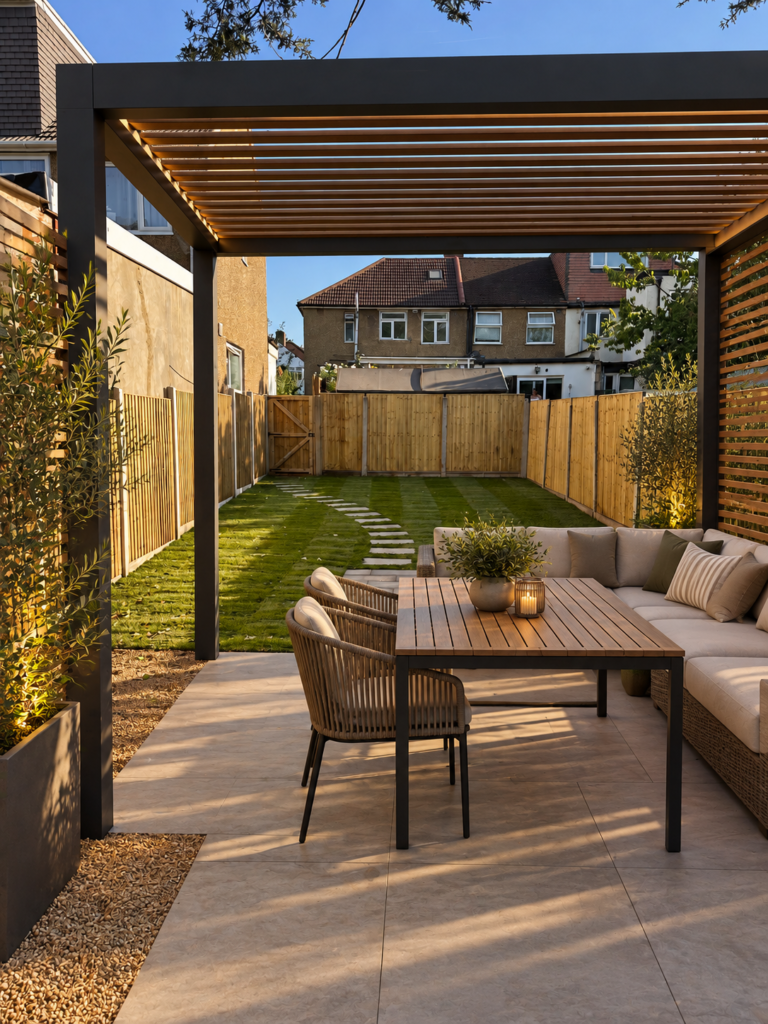
- A pergola with carefully positioned screening
- Decorative screens that interrupt direct sightlines
- Taller planting behind an existing boundary
A pergola can be particularly useful when a neighbouring window overlooks your patio from above. Depending on its design, it can support planting or additional screening around the seating area.
How can you improve privacy in a small London garden without blocking light?
Small London gardens often benefit from targeted screening rather than taller fencing around every boundary. Keeping some areas open to light can make a compact garden feel more spacious while still providing privacy around seating and dining areas.
Before changing the fence, consider where sunlight enters the garden.
A tall, solid structure along the wrong boundary may create unnecessary shade, particularly in gardens that already receive limited daylight during autumn.
A combination of fencing, trellis and planting can offer greater flexibility.
For example, a solid fence could screen the lower part of the garden while an open trellis adds height near a seating area. Evergreen climbing plants can then provide additional cover as they grow.
The colour of the fence also influences how the garden feels. Darker finishes can make boundaries appear less visually prominent, while lighter tones may brighten a particularly shaded space.
Neither changes the actual level of privacy, but both can affect the finished appearance.
In a compact garden, the most effective design often comes from screening one important view rather than trying to conceal every surrounding property.
Is autumn a good time to install fencing and improve garden privacy?
Yes. Autumn can be a practical time for fence installation, repairs and privacy improvements when weather and ground conditions allow. It also gives homeowners an opportunity to identify exposed areas before winter removes more of the surrounding foliage.
You may find that your existing fence needs only minor repairs. Replacing damaged panels or fixing loose posts can improve the boundary without requiring a complete garden makeover.
If you plan to install new fencing, check the existing boundary and any relevant restrictions before work begins. In England, permitted development rules depend on factors including fence height, highway proximity and the property’s status.
A professional assessment can help you decide whether repairs, new panels or a combination of fencing and planting will achieve the result you want.
Frequently asked questions
Will trellis provide privacy when climbing plants lose their leaves?
A trellis on its own offers limited privacy because the gaps between its supports remain open. Deciduous climbers also lose much of their screening ability in autumn. Evergreen climbers can provide more consistent cover, although their effectiveness depends on the species, growing conditions and how densely they grow.
Can I add privacy screening to an existing garden fence?
Yes, you can often add suitable screening to an existing fence if the structure can support the additional weight and wind load. Check the condition of the posts and panels first. If the fence belongs to a neighbour, obtain their permission before attaching anything to it.
Do evergreen hedges provide privacy immediately after planting?
Evergreen hedges retain foliage throughout the year, but new plants may not provide complete privacy immediately. The result depends on their initial size, planting distance and growth rate. Larger specimens can offer more immediate screening, although smaller plants may establish more easily and usually cost less.
Can outdoor lighting affect garden privacy at night?
Yes. Bright lighting behind a seating area can make people more visible from neighbouring properties, particularly when the surrounding garden is dark. Position lights carefully and avoid unnecessary glare. Low-level lighting around paths and seating areas can improve visibility without illuminating the entire garden.
Should I replace my fence if neighbouring plants currently provide privacy?
Not necessarily. If your fence remains stable and provides an adequate boundary, evergreen screening or targeted improvements may be enough. However, plants should not conceal structural problems. Check the condition of the fence before relying on surrounding greenery to provide privacy throughout the year.
Thinking about making your London garden more private?
Autumn can reveal exactly where your garden needs more privacy. A few carefully chosen improvements can help you feel comfortable outside, even when the surrounding trees and shrubs lose their leaves.
PI Gardening provides fence installation, fence repair, trellis installation and garden landscaping across London and surrounding areas.
Whether you need to repair an existing boundary, install new fencing or create a more secluded outdoor space, our team can help you explore practical solutions for your garden.
Contact PI Gardening for a free quote and start planning a garden that feels private throughout the year.