

A newly turfed lawn needs regular watering, limited foot traffic, and careful mowing while its roots establish in the soil below. The care for new turf lawn is essential during the first few weeks, as this is when the new grass is most vulnerable to drying, lifting and uneven growth.
For London homeowners, the challenge is often knowing how much care new turf actually needs. London weather can move quickly between rain, warm sunshine and dry spells, so relying on the forecast alone is rarely enough.
This guide explains how to water, protect and mow a newly turfed lawn, along with the most common aftercare mistakes to avoid.
What Should Happen Before New Turf Is Laid?
The ground should be cleared, levelled and properly prepared before turfing begins. Removing old grass, weeds, stones and compacted soil gives the new turf better contact with the ground and allows its roots to establish evenly.
Good ground preparation is one of the most important parts of turfing a lawn. Even high-quality turf can struggle if it is laid over an uneven, poorly drained or compacted surface.
Preparing the ground for turfing usually involves:
- Removing the existing lawn, weeds and unwanted growth
- Clearing stones, roots and garden debris
- Loosening compacted soil
- Adding suitable topsoil where required
- Improving drainage in problem areas
- Levelling and lightly firming the surface
- Applying pre-turf fertiliser when appropriate
The prepared ground should be firm enough that it does not sink significantly underfoot, but loose enough for the turf roots to grow into it.
This is also the best time to correct dips, raised areas and drainage problems. Laying turf over an uneven garden may hide these issues temporarily, but they often return as puddles, soft areas or an awkward mowing surface.
Professional turfing therefore involves much more than simply rolling grass over the garden. The quality of the preparation underneath has a major effect on the finished lawn above.
How Often Should You Water New Turf?
New turf should be watered thoroughly immediately after installation and kept consistently moist while it establishes. During warm or dry weather, this may mean watering every day, while cooler or wetter conditions may require less frequent watering.
The water needs to reach through the turf and into the prepared soil underneath. Lightly spraying the surface may make the grass look wet without giving the roots enough moisture.
During the first week, check the lawn regularly by gently lifting a corner of the turf. Both the underside of the turf and the soil below should feel damp.
A newly turfed lawn may need extra attention when:
- The weather is warm or windy
- The garden receives long periods of direct sunlight
- The soil drains quickly
- The turf edges begin to curl or dry
- The grass starts losing its fresh green appearance
The edges and corners of a newly laid lawn usually dry faster than the central areas, so give them particular attention.
At the same time, the lawn should not remain waterlogged. Constant standing water can reduce oxygen around the roots and may indicate a drainage problem. The goal is consistently moist soil rather than a saturated surface.
Watering early in the morning or later in the day can reduce evaporation. During a warm London summer, watering in strong midday sun is less efficient because more moisture may be lost before reaching the roots.
How Long After Turfing Can You Walk on the Lawn?
Regular foot traffic should usually be avoided for around two to three weeks after turfing, or until the grass has rooted firmly into the soil. The lawn is ready for light use when the turf no longer lifts easily at the corners.
Walking on new turf too soon can push sections out of position, create uneven areas and damage the delicate roots developing underneath.
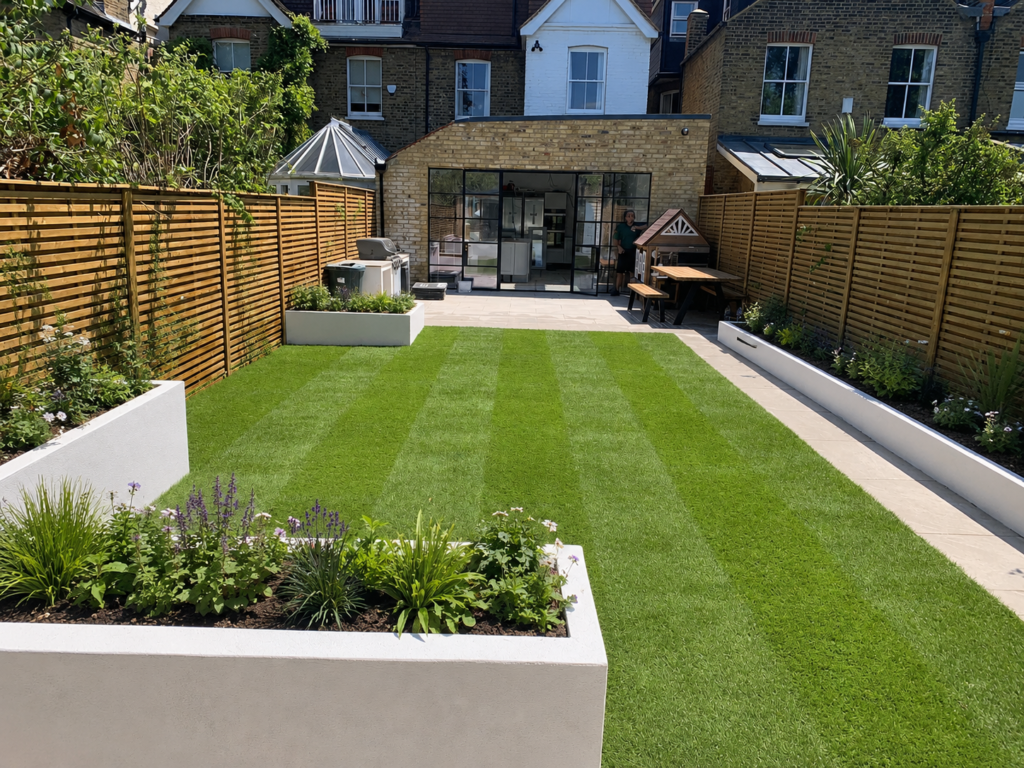
Some access may be necessary for watering, but try to vary your route rather than repeatedly stepping on the same area. Where possible, water from the edge of the lawn or use a sprinkler that can cover the area evenly.
Children, pets and garden furniture should remain off the grass during the establishment period. A few extra days of patience can prevent flattened sections, visible joins and muddy depressions.
Before returning the lawn to normal use, check several areas rather than testing only one corner. Shadier or wetter parts of the garden may establish more slowly than areas receiving more sunlight.
When Should You Mow a Newly Turfed Lawn?
A newly turfed lawn should be mown once the grass has grown noticeably and the turf has rooted firmly enough that it cannot be lifted easily. In good growing conditions, the first mow may be possible after around 10 to 14 days, although cooler weather can extend this period.
Do not decide by the calendar alone. Test the turf first by gently pulling at an edge. If it remains securely attached to the soil, the roots have started establishing.
For the first mow:
- Use a mower with sharp blades
- Make sure the grass is reasonably dry
- Set the mower to a higher cutting position
- Remove no more than one-third of the grass height
- Avoid turning the mower sharply on the lawn
- Stop if the turf begins lifting or moving
Cutting new grass too short can place unnecessary stress on it. Leaving it excessively long, however, can encourage weak growth and make the first cut more difficult.
Frequent, light mowing is better than allowing the grass to become very tall and then removing a large amount at once. Over time, this encourages the lawn to grow more densely.
What Lawn Care Does New Turf Need During the First Six Weeks?
During the first six weeks, new turf needs a gradual transition from intensive establishment care to a normal lawn maintenance routine. Watering can be reduced as the roots deepen, while mowing should become more regular.
A simple aftercare timeline may look like this:
The first week
Keep the lawn consistently moist and avoid walking on it. Check the edges, corners and sunny areas regularly, as these may dry more quickly.
Weeks two and three
Continue watering according to the weather and check whether the turf has rooted. Carry out the first mow when the lawn is secure and the grass is long enough.
Weeks three to six
Begin reducing the frequency of watering while encouraging the roots to grow deeper. Continue mowing lightly and avoid heavy use if any areas still feel soft or unstable.
After six weeks
The lawn should be moving towards a more typical maintenance routine. Water during prolonged dry weather, mow regularly and begin planning seasonal feeding according to the lawn’s condition.
These timeframes are approximate. Turf laid during warm spring weather may establish faster than turf installed during a cool period with limited growth.

What Problems Can Appear After Turfing?
The most common problems after turfing include dry edges, yellow patches, visible gaps, uneven rooting and soft or waterlogged areas. Most can be traced back to watering, ground preparation, poor soil contact or premature use.
Dry or curling edges
Edges can dry faster because they are exposed to more air. Increase watering around the perimeter and make sure each turf roll is sitting firmly against the soil.
Yellowing grass
Some temporary colour change can occur after installation, but persistent yellowing may indicate that the turf is too dry, too wet or struggling to establish.
Check the soil rather than judging moisture from the grass surface alone. If the lawn remains wet for long periods, drainage may need attention.
Gaps between turf rolls
Small gaps can appear if the turf dries and shrinks. Consistent watering reduces this risk.
Turf rolls should be fitted closely together during installation without being stretched. Significant gaps may need professional correction rather than simply filling them with loose soil.
Bumps and dips
An uneven lawn is often caused by inadequate preparation beneath the turf. Minor irregularities may settle, but larger dips can collect water and make mowing difficult.
Turf that lifts easily
If the turf still lifts after several weeks, it may not have sufficient contact with the soil or may have dried during establishment. Continue protecting the area and seek advice if rooting does not improve.
When Is the Best Time for Turfing in London?
Spring and early autumn are often the easiest times to lay turf in London because the soil is usually moist and temperatures support root development. Turfing can still be completed at other times of year as long as the ground is not frozen, heavily waterlogged or extremely dry.
London’s relatively mild climate gives homeowners a reasonably flexible turfing season.
Each season brings different considerations:
- Spring: Good growing conditions, although regular watering may still be needed.
- Summer: Fast establishment is possible, but the lawn may require intensive watering.
- Autumn: Warm soil and more natural rainfall can support strong root growth.
- Winter: Turf can sometimes be laid during mild periods, but establishment will be slower.
The condition of the garden matters as much as the month. It is better to delay turfing than to lay a new lawn over frozen soil, standing water or ground that cannot be prepared properly.
How Should You Maintain the Lawn Once It Is Established?
An established turfed lawn needs regular mowing, occasional feeding and suitable care during dry or wet weather. Seasonal maintenance helps the grass remain dense, healthy and better able to recover from everyday use.
Long-term lawn care may include:
- Mowing regularly during active growth
- Keeping mower blades sharp
- Watering deeply during extended dry spells
- Applying suitable seasonal lawn feed
- Removing leaves and garden debris
- Aerating compacted areas
- Scarifying when excessive thatch develops
- Repairing small worn patches before they spread
Avoid mowing the lawn extremely short, especially during hot or dry conditions. Slightly longer grass can shade the soil and reduce moisture loss.
Heavy foot traffic can gradually compact the ground, particularly in smaller London gardens where the same routes are used repeatedly. Aeration can help improve the movement of water, air and nutrients through the soil.
Garden maintenance should respond to the lawn rather than follow a rigid schedule. Weather, shade, soil type and usage all affect how quickly grass grows and what care it needs.
Should You Repair an Old Lawn or Re-Turf It?
Small isolated patches can often be repaired, but re-turfing may be more suitable when damage affects most of the lawn. Widespread weeds, severe unevenness, poor drainage and heavily compacted soil can make repeated patch repairs less effective.
Repair may be enough when:
- Damage is limited to one or two small areas
- The surrounding grass is healthy
- The surface remains reasonably level
- The underlying soil is in good condition
Re-turfing a lawn may provide a better result when:
- Much of the grass is thin, muddy or worn
- Weeds have spread throughout the garden
- The lawn contains numerous bumps and dips
- Previous repairs have repeatedly failed
- The garden needs levelling or drainage improvements
Removing the old lawn also provides an opportunity to address the underlying cause of the problem. Without that work, new grass may eventually develop the same issues.
Is Professional Turfing Worth It?
Professional turfing can be worthwhile when a garden requires substantial clearance, levelling, soil improvement or drainage work. Correct preparation and installation reduce the risk of gaps, uneven areas and poor establishment.
For homeowners, one of the main benefits is having the whole process managed properly, from removing the existing lawn to preparing the ground and laying the final turf.
A turfing company can also assess whether turf is the best solution for the space. Gardens with deep shade, severe drainage problems or exceptionally heavy use may need additional landscaping work or a different type of surface.
The cost of turfing a garden will depend on factors such as:
- The size of the lawn
- The condition of the existing ground
- Access to the garden
- Waste removal requirements
- The amount of topsoil needed
- Levelling or drainage work
- The type and quality of turf selected
A site-specific quote is therefore more useful than relying on a general cost per square metre.
Frequently Asked Questions
How long does new turf take to root?
New turf usually begins rooting within the first couple of weeks, but full establishment takes longer. Test it by gently lifting a corner; resistance means the roots are connecting with the soil.
Can you lay turf over existing grass?
Turf should not normally be laid directly over an existing lawn. The old grass and weeds should be removed so the soil can be prepared, levelled and brought into proper contact with the new turf.
Can turf be laid during summer?
Turf can be laid during summer, but it requires careful and frequent watering. The turf and soil must not be allowed to dry out while the roots are establishing.
When can children and pets use new turf?
Children and pets should generally stay off a newly turfed lawn for around two to three weeks. Wait until the turf is securely rooted and no longer moves or lifts under light pressure.
How often should an established lawn be watered?
Established lawns usually need watering only during prolonged dry periods. Deeper, less frequent watering is generally more beneficial than light daily sprinkling because it encourages deeper root growth.
Thinking About Turfing Your London Garden?
Fresh turf can create an immediate garden transformation, but its long-term success depends on much more than the grass itself. Careful preparation, professional installation and the right lawn care during the first few weeks all help produce a healthier, more even result.
PI Gardening provides turfing, garden landscaping and ongoing garden maintenance across London and surrounding areas. Whether you need to replace a tired lawn, prepare an overgrown garden or improve your wider outdoor space, our team can help you choose the right approach.
Contact PI Gardening to arrange a free quote for your garden.